

Product Care
Care well.
Travel longer.
Thoughtful care between journeys helps keep luggage, travel bags and packing organizers clean, orderly and ready for the next departure. Use these simple care habits as a general guide, while always following any item-specific instructions supplied with your product.
When a product includes its own care label or material-specific instructions, those directions should take priority over the general recommendations on this page.

The after-trip reset.
A short routine when you return home can help prevent dirt, trapped moisture and forgotten items from staying inside your travel gear until the next trip.
Unpack completely
Check main compartments, interior pockets and organizers. Remove clothing, toiletries, documents and small travel accessories before cleaning or storing the item.
Remove loose debris
Shake out removable organizers where appropriate and use a soft, dry brush or cloth to clear dust, lint and loose particles from corners, seams, wheels and zipper areas.
Wipe with restraint
For surfaces that permit damp cleaning, use a soft cloth with a small amount of mild soap and water. Avoid soaking the product, and test an inconspicuous area first when needed.
Air dry fully
Allow every cleaned area to dry completely before closing or storing your luggage. Keep drying items away from strong direct heat and prolonged intense sunlight.
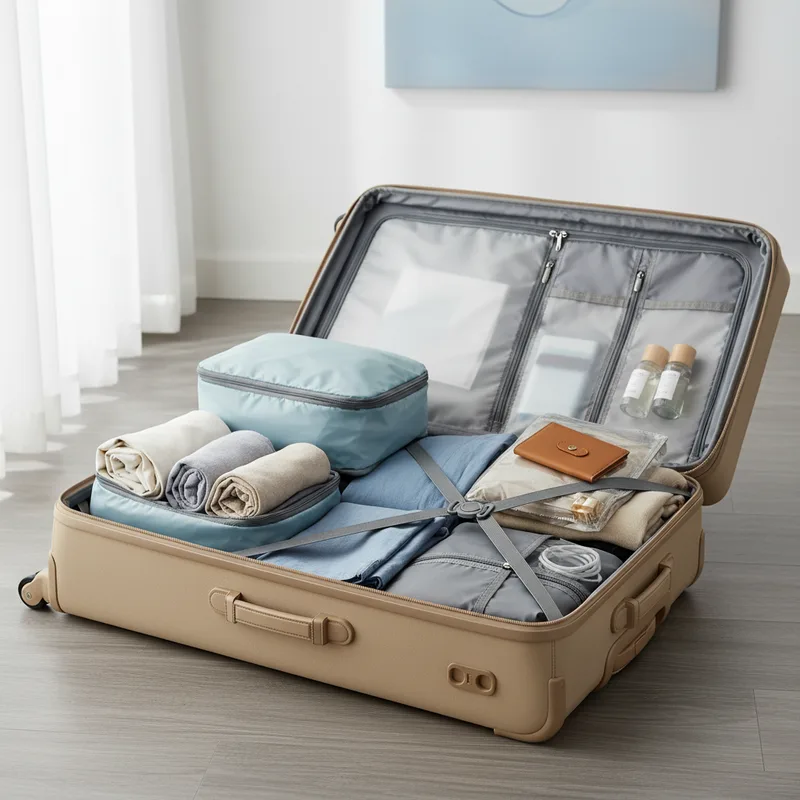
A little attention between departures.
Travel naturally exposes luggage to floors, baggage areas, vehicle trunks, hotel rooms and changing weather. Cosmetic marks and ordinary signs of use can occur, so regular light cleaning is preferable to letting residue accumulate.
Before using any cleaner, confirm that it is suitable for the specific surface. Strong chemicals, bleach, solvents, abrasive pads and aggressive scrubbing can affect finishes, coatings, trims or fabrics and are best avoided unless a product's own instructions specifically permit them.
Care by component.
Different areas of travel gear experience different types of wear. Treat each component gently rather than applying one cleaning method to the entire product.
Shells and outer surfaces
- Begin by removing loose dirt with a soft cloth.
- Where appropriate, use a lightly damp cloth with mild soap for small marks.
- Avoid abrasive scrubbers that can alter surface appearance.
- Do not leave the exterior wet when placing luggage into storage.
Backpacks, duffels and weekenders
- Check the product's care label before introducing water or cleaning solutions.
- Spot clean gently rather than saturating the entire bag unless washing is specifically allowed.
- Empty every pocket first and keep structured areas supported while drying.
- Allow the bag to dry naturally before packing it away.
Wheels and telescoping handles
- Remove visible hair, lint and loose debris from wheel areas after travel.
- Wipe accessible surfaces clean without forcing tools into moving mechanisms.
- Keep telescoping handle tubes clean and dry before retracting them.
- Avoid adding oils or lubricants unless specifically recommended for your item.
Zippers, seams and straps
- Clear dirt from the zipper path and keep nearby fabric away from the slider.
- Do not force a zipper when packed contents are creating tension.
- Check straps and seams before a trip so loose items are noticed early.
- Close compartments gently after confirming nothing is caught in the opening.

Keep organizers fresh between journeys.
Packing cubes, toiletry bags and travel organizers are frequently handled and stored inside closed luggage. Empty them fully after travel, remove loose particles and use only the cleaning method appropriate for the individual organizer.
Store with intention.
Good storage protects the clean, organized condition you created after your trip and keeps your travel setup easier to prepare next time.
Do not store damp luggage.
Residual moisture can create unwanted odor or marks. Allow interiors, pockets, wheels and cleaned exterior areas to dry completely before storage.
Avoid unnecessary compression.
Keep structured luggage and travel bags away from excessive weight or pressure that could leave the item distorted while it is not in use.
Choose a clean, dry location.
Store travel gear away from persistent moisture, harsh heat and prolonged direct sunlight. A stable indoor environment is preferable for extended storage.
Keep the interior travel-ready.
Remove receipts, used tissues, food, liquids and other trip remnants before storage so the next packing session begins with a clean, empty interior.
Address a problem before the next trip.
If you notice a wheel, handle, zipper or structural issue, avoid forcing the component. Contact Rovelle before relying on the item for another journey.
Simple answers for everyday upkeep.
These recommendations are general. Product-specific care labels and instructions should always be followed when they differ.
Can I put my Rovelle luggage or travel bag in a washing machine?
Do not machine wash an item unless its own care instructions specifically say that machine washing is suitable. Structured luggage, hardware, trims and many travel bags may require surface or spot cleaning instead.
What should I do when something spills inside my luggage?
Remove the contents, absorb excess liquid without aggressively rubbing the area, and follow the item's material-specific cleaning instructions. Allow the interior to dry completely before closing or storing the luggage.
How should I clean luggage wheels after a trip?
First remove accessible loose debris such as lint or hair. Then wipe the exposed wheel surfaces gently with a suitable cloth. Avoid forcing sharp tools into the wheel assembly or adding lubricants unless that treatment is specifically recommended.
What is the safest approach to cleaning an unfamiliar material?
Start with the product's care label or supplied instructions. When damp cleaning is permitted, use a minimal amount of mild solution and test a small inconspicuous area before treating a more visible section.
When should I contact Rovelle for help?
Contact our team when you are unsure about appropriate care for your item or when a wheel, zipper, handle or other component is not functioning normally. Avoid forcing a damaged or resistant component.
Ask before you treat an unfamiliar material.
If you are uncertain about cleaning, maintenance or a specific component, contact Rovelle with details about your item and the area you are concerned about.